
Right Hand Fingering Guide
Getting a great set of fingerings for a piece is not easy. The goal of this post is to provide some things to think about when putting together your right hand fingerings for a piece.
“Good” vs. “Bad” string crossings
This can be extremely helpfully in scalar passages. A “good” string crossing looks like this:
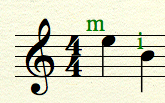
A “bad” crossing is like this:
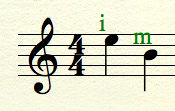
Good and bad are in quotation marks because it doesn’t really matter. Whenever there’s a string crossing the arm carries a finger to the next string. It’s very apparent when doing a “bad” crossing. Most times the easiest way to is to use a “good” string crossing. This is especially true for beginners.
Use a to Prevent Bad Crossings
More advanced guitarists can make very effective use of a to prevent bad crossings. Take a look at this scale, for example:
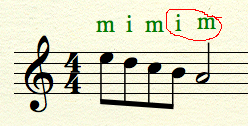
Strict mi alternation produces a “bad” crossing (circled). Using a can avoid this:
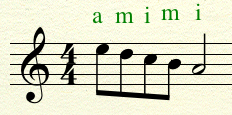
Despite all this, bad crossings happen sometimes. Your practice should include both good and bad string crossings. But when preparing a piece for performance choose the easier and most logical finger.
Arpeggio Textures: Constructive Cheating
When performing a piece that has an arpeggio texture, the easiest right hand pattern should be used. This is especially important in faster pieces. There’s a couple ways to “cheat” that step outside the traditional norm.
- Move the Thumb around. Sometimes it’s easier to bring the thumb up to grab a string than trying to play it with another finger.
- Use four fingers where three would do. A simple pimi arpeggio can be played very quickly and cleanly using piam.
The Bottom Line
When fingering a piece, make it as easy as possible. Performing is stressful already, so don’t make it any more difficult. There are obvious advantages to playing studies a harder way, some etudes have specific purposes and fingering shouldn’t be messed with to make them easier. However, concert pieces are often a different story.
Denny Cicak
Good points! I’m having some success with avoiding use of i or a on a higher string than m due to the shortness of the i and a fingers compared to m. For my technique, it matters little whether I choose i or a to play the lower treble strings as long as I alternate them. Like you say, the objective is to avoid what you are calling “bad crossings” and to always have a free finger available to play the next note. I think using a on the top note all the time, like you most often see in fingered pieces, can lead to difficulty, and you can often get good results using a, along with i, in closer to p.